Summary
Ninshubur is the minister of Inanna in Sumerian myth, the messenger she trusts. Inanna calls her "my faithful minister of E-ana, my minister who speaks fair words, my escort who speaks trustworthy words". In the third millennium BCE she was a goddess, called "mother" in personal names, with her cult centre at the town of Akkil, and her most common epithet was "vizier of heaven".
Her fullest story is the Sumerian poem Inana's descent to the nether world. Inanna abandons her temples in the cities, takes the seven divine powers, puts on her crown, her beads and the garment of ladyship, and sets out for the underworld with Ninshubur behind her. On the way she gives her instructions: when I have reached the underworld, lament for me on the ruin mounds, beat the drum for me in the sanctuaries, make the rounds of the houses of the gods for me, lacerate your eyes and nose, clothe yourself like a pauper in a single garment, go alone into the E-kur, the house of Enlil, and say: Father Enlil, don't let anyone kill your daughter in the underworld, don't let your precious metal be alloyed with the dirt of the underworld. If he does not help, go to Nanna at Ur; if he does not help, go to Enki at Eridu, for he knows the plant of life and the water of life, and he will restore me. Then Inanna passes the seven gates of the underworld, losing a piece of her finery at each, until she stands naked before her sister Ereshkigal, who gives her the look of death, and her corpse is hung on a hook.
After three days and three nights Ninshubur carries out her mistress's instructions to the letter: she laments, beats the drum, makes the rounds, lacerates her face, dresses in the single garment and enters the E-kur. Enlil answers in rage: my daughter craved the great heaven and craved the great below as well, and whoever gets the powers of the underworld must remain there. Nanna answers the same. Enki says: what has my daughter done? She has me worried. He takes dirt from under his fingernail and makes two beings, the kurgarra and the galatura, gives one the plant of life and the other the water of life, and they slip into the underworld like flies and sprinkle the corpse, and Inanna rises. When she comes up, demons go with her to take a substitute; they find Ninshubur thrown down at the door in the dust and a filthy garment and say: go on to your city, we will take her. Inanna answers: this is my minister of fair words, she did not forget my instructions, she brought me back to life; how could I hand her over to you? She goes on until she finds her husband Dumuzi seated on his throne, not mourning her, and gives him up.
The idea her story turns on is that a word kept saves the one who gave it. Inanna is not saved by her own power, for the gates of the underworld stripped it from her; she is saved because she left behind someone who would keep her instructions and carry them out as they were spoken. Ninshubur's mourning is not only grief for the dead but a petition, carried round three gods until one of them listens. That is why the vizier remains, in everything that follows, the one who speaks between a lord and those who come to him, taking the request in and the answer out.
We read the name in the Arabic tongue like this, as a reading proposed on the method: the Sumerian essay does not read her name, only that of Inanna whom she serves. It is written ᵈnin-šubur. We leave nin as the title for a lady, as in the name of Ninurta, which leaves šubur. Its nearest Arabic word is safīr: Lane gives a messenger, and a mediator who goes between people and makes peace among them; safartu bayna l-qawm, I made peace between the people, because whoever does so lays open what is in the mind of each party. Sumerian š answers s, b answers f, and r is r. That is Ninshubur's work in the poems: she goes between Inanna and the gods and carries her word to Enlil, Nanna and Enki until it is heard.
Linguistic Root
Forms of the name
| Form | Use |
|---|---|
| ᵈnin-šubur | The usual spelling |
| -su:bar, -su-bu-ra | Phonetic spellings of the second element, in a Fara text and an Emesal text |
| Nincubura | ETCSL's form in the Descent, with the genitive ending |
| ᵈŠubur | The name alone, without the title |
| Ilabrat, ᵈI-la-ab-ra-at | The male Akkadian counterpart |
| Papsukkal | The vizier who replaced him from the Kassite period |
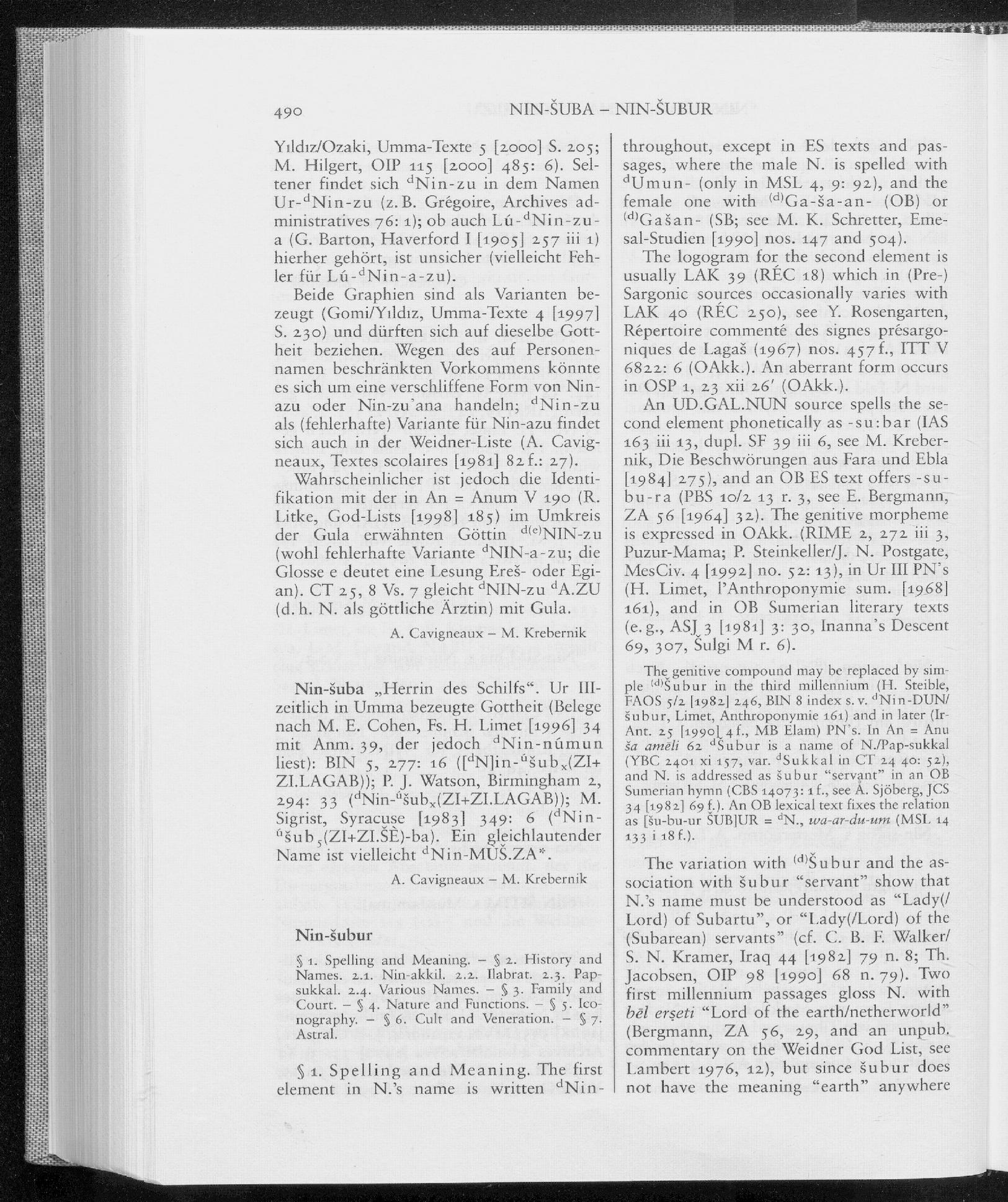
Wiggermann notes that the second element is sometimes spelled phonetically su:bar and su-bu-ra, that the name is sometimes shortened to ᵈŠubur alone, and that an Old Babylonian lexical text sets šubur beside Akkadian wardum, "servant". From this he understands the name as "Lady of Subartu" or "Lady of the (Subarean) servants". Two first-millennium passages gloss it "lord of the earth/netherworld", which he calls an interpretation rather than a translation, since šubur never means "earth" in Sumerian texts.
Safīr
With nin set aside as the title, the reading covers šubur. Its three consonants are š, b and r. Sumerian writing does not keep s and š apart as Arabic does in every position, and the Fara spelling writes the element with s: su:bar. B and f share a place of articulation, and Akkadian has no f, so what is f in Arabic is written there with b or p. R is r. The consonants meet in s-f-r. Lane: safara bayna l-qawm, he made peace between the people; safīr, a messenger who makes peace, plural sufarāʾ. This meets what Wiggermann says of Ninshubur's work: she is the go-between of Inanna and her people, shown on seals introducing the worshipper to her mistress and interceding for him, and on the level of the state her role is that of a diplomat in the service of Inanna and her city.
What remains is that Sumerian šubur means servant and is also the name of Subartu in the north, so the reading takes the bearer's work rather than the attested sense of the word. The two are close: a servant sent on his master's business is a messenger, and a messenger is his master's servant. No second Sumerian-Arabic pair with b against f in a word of this kind is known yet, so the reading stays open.
Ilabrat
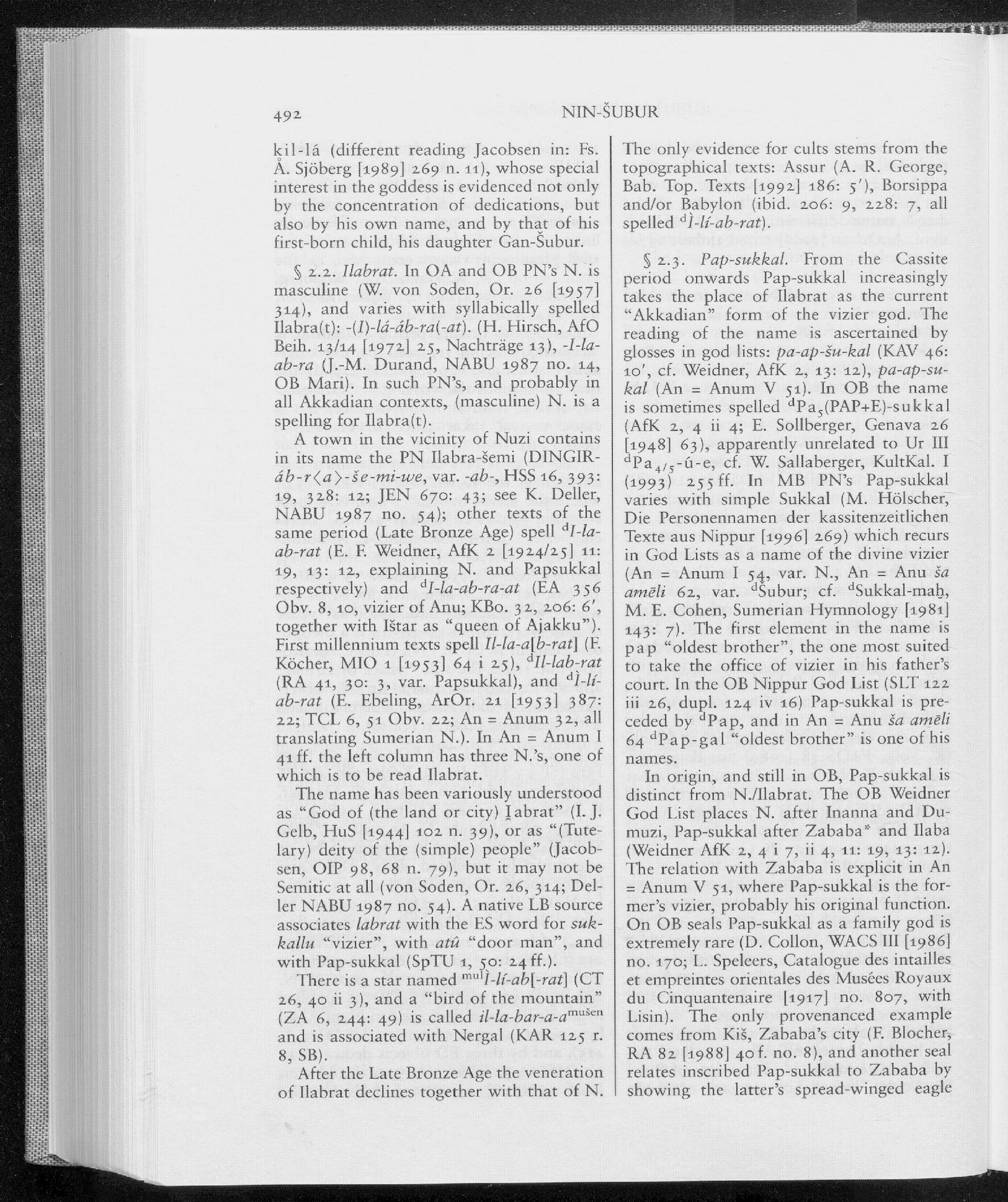
The Akkadian counterpart Ilabrat is male; his name has been understood as "god of (the land or city) Yabrat" or "deity of the simple people", and von Soden and Deller think it may not be Semitic at all. In the Adapa story on the Amarna tablet Ilabrat is the vizier of Anu. Wiggermann, p. 492.
Key Mythic Narratives
The Boat of Heaven
In Inanna and Enki Inanna drinks with Enki at Eridu, and in his drunkenness he gives her the divine powers, which she carries off in the Boat of Heaven to Uruk. When Enki sobers up he asks his minister Isimud about the boat and sends after her, time after time, those who are to take it back: the enkum, then the fifty giants of Eridu, then creatures of the waters. Each time Inanna answers that her father's word cannot be countermanded and calls on Ninshubur: come, my good minister of E-ana, my fair-spoken minister, my envoy of reliable words; and Ninshubur saves the boat. When it reaches the Gate of Joy at Uruk, Ninshubur says: today you have brought the Boat of Heaven to Uruk, now there will be rejoicing in our city.
From Ninshubur to Ilabrat and Papsukkal
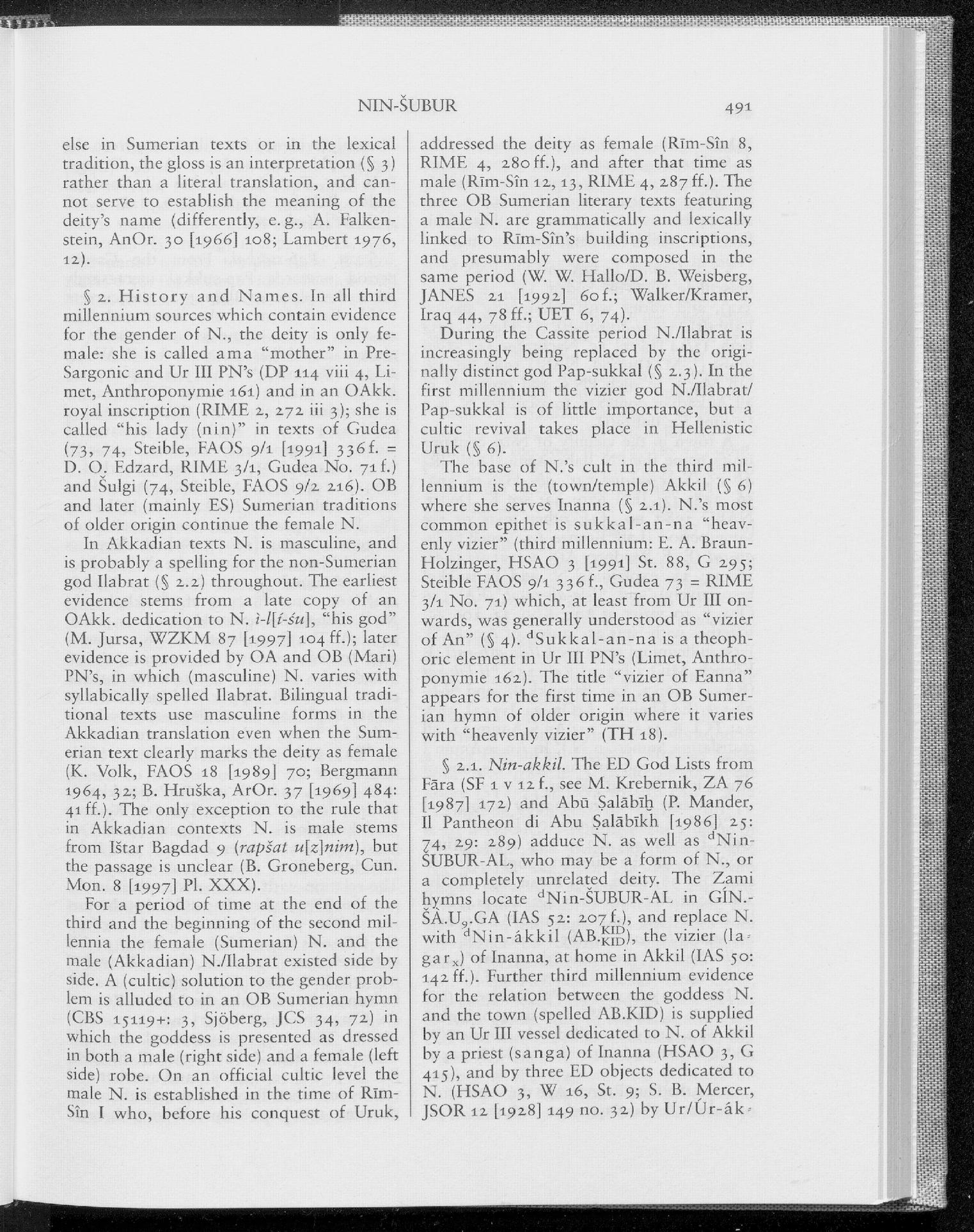
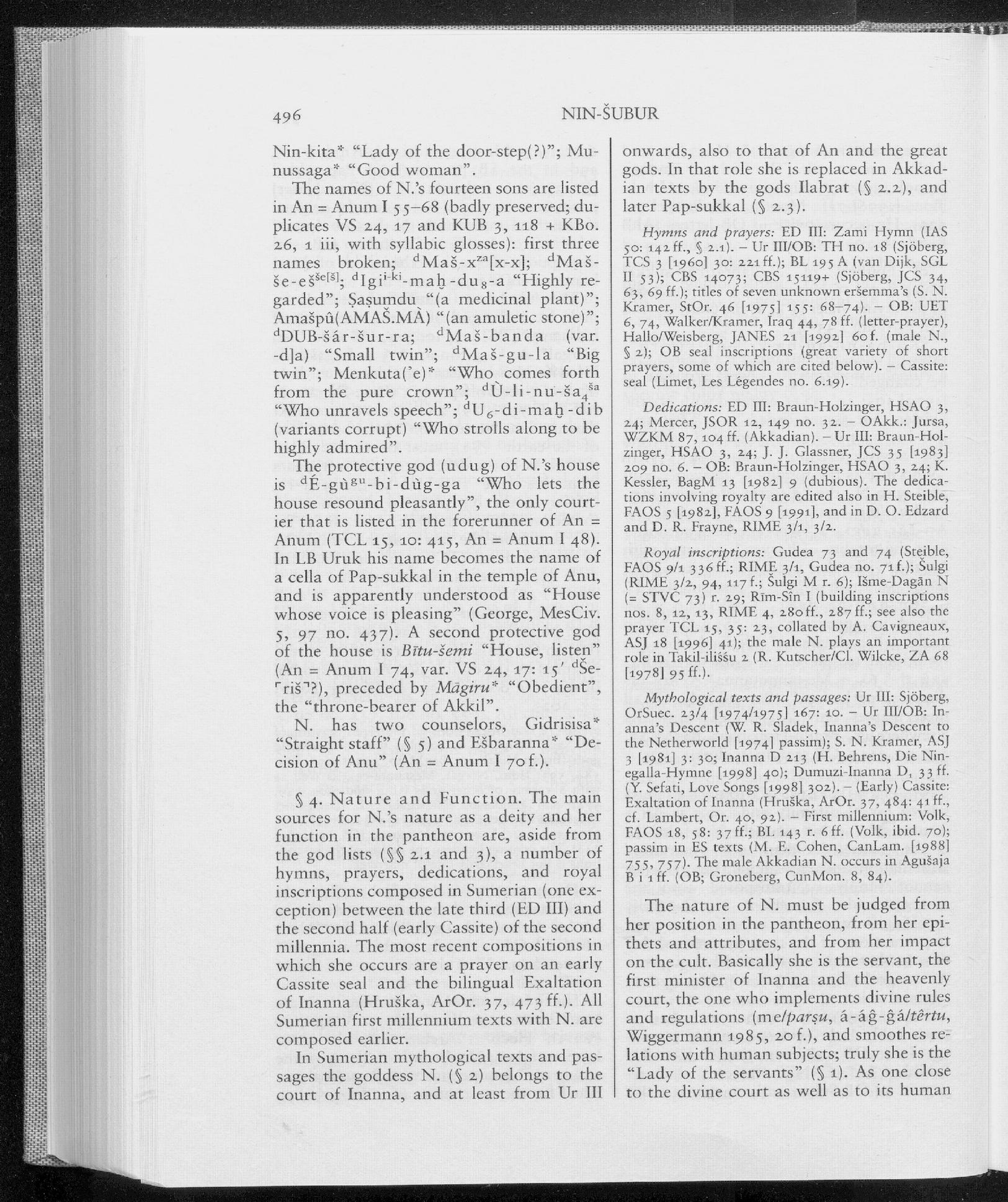
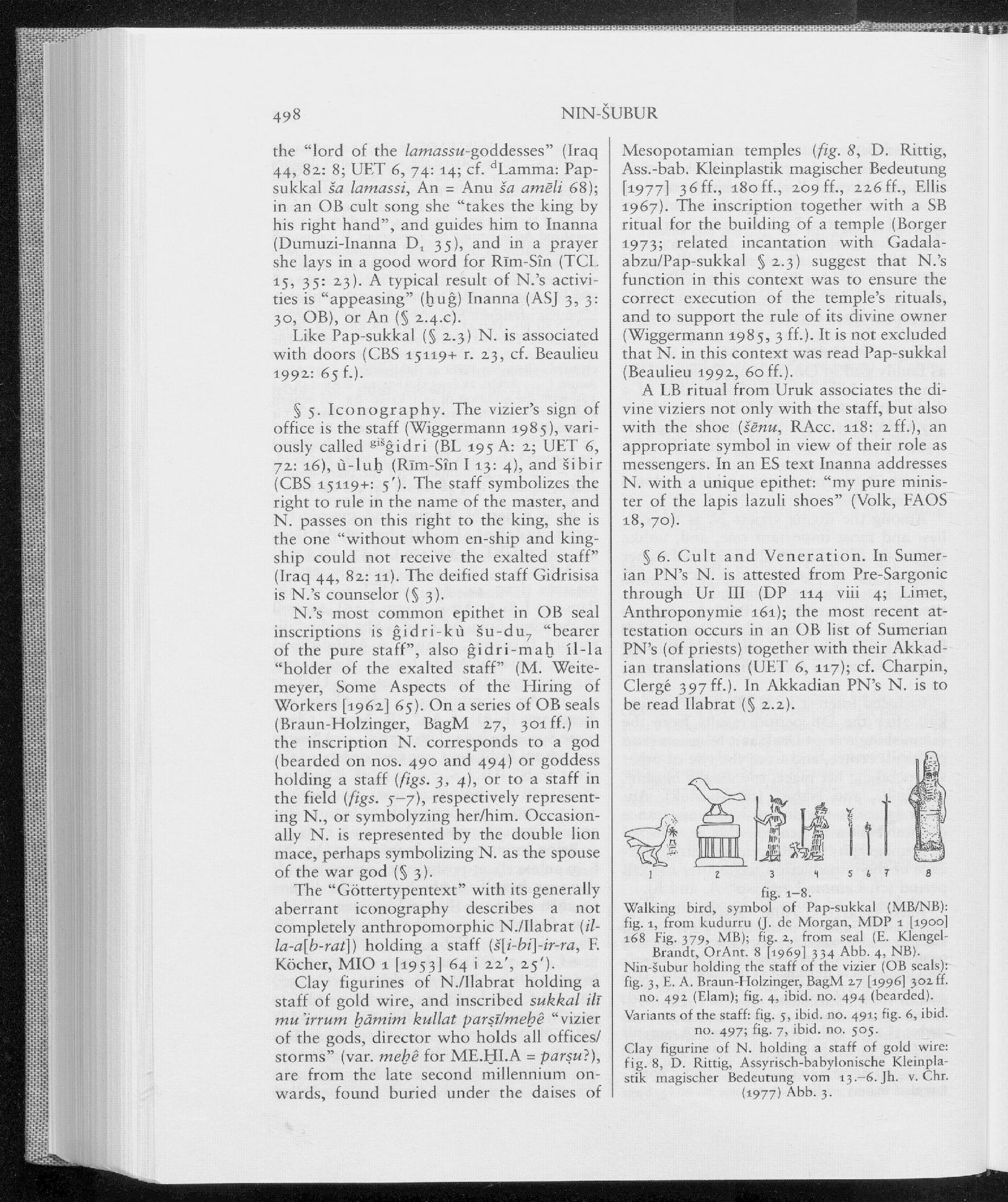
Wiggermann writes that in all third-millennium sources Ninshubur is female, while in Akkadian texts the deity is male and the name is a spelling for Ilabrat. For a time at the end of the third and the beginning of the second millennium the two existed side by side, and an Old Babylonian hymn dresses the goddess in a male robe on the right side and a female robe on the left. From the Kassite period Papsukkal took his place and became Ishtar's vizier in the Akkadian version of the Descent. The vizier carries a staff, the symbol of his office, guards the entrances of temples and houses, has clay figurines of himself buried under the floors of temples, and is shown on boundary stones as a walking bird. Finally he is identified with the constellation Sipazianna, "the true shepherd of heaven", Orion.
Symbolic Reading
The Sumerian reread essay reads Inanna's descent in two ways: the planet Venus vanishes from the sky for some days as it passes between the earth and the sun, then reappears as the morning star; and the fertile land dries up in summer and returns in autumn. In that scene Ninshubur stands for the people themselves: she does what the family of the dead does, lamenting, scratching her face and wearing a rag, then carries her grief to the gods as a petition. The rite people performed for their dead becomes, in the poem, the road by which life is brought back.
Cross-Cultural Parallels
Her nearest counterpart in Sumer is Geshtinanna, Dumuzi's sister, who keeps faith with her brother and will not betray him to the demons, and later goes down in his place half the year. The same story makes the rescuer once the minister and once the sister, and makes loyalty what brings back the absent or bears the burden for them. See Descent to the Underworld.
In the North Hermóðr rides Odin's horse nine nights to Hel to ask for Baldr back, as Ninshubur goes round three gods asking for Inanna. The difference is that Hermóðr goes down himself to the queen of the dead, while Ninshubur stays above and asks the one who can act; her petition succeeds and his fails, because one weeper would not weep.
Among the Greeks Hermes is the messenger of the gods who carries the staff, and it is he who is sent down to Hades to bring Persephone back to her mother. The staff is the sign of the Mesopotamian vizier's office as it is of Hermes; the route between the two emblems is not known.